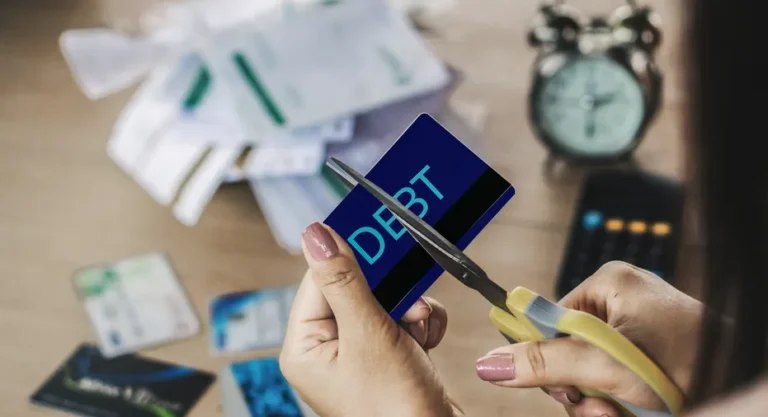
Credit card debt is a financial burden that many Americans struggle with daily. The high-interest rates, combined with the ease of spending on credit, often lead individuals into a cycle of debt that can feel impossible to escape.
However, with the right strategies and a disciplined approach, getting out of credit card debt is entirely achievable. In this article, we will explore some effective strategies to help you regain control of your finances and eliminate credit card debt for good.
Create a realistic budget and stick to it

The first and most crucial step in getting out of credit card debt is creating a realistic budget. A budget allows you to track your income and expenses, helping you identify areas where you can cut back and allocate more money towards paying off your debt.
Start by listing all your sources of income and fixed expenses, such as rent, utilities, and groceries. Next, review your discretionary spending, like dining out, entertainment, and shopping. These are areas where you may be able to reduce your expenses significantly.
Once you have a clear picture of your finances, set a specific amount to pay towards your credit card debt each month. It’s essential to be realistic with this amount; setting it too high may lead to frustration and abandoning the plan, while setting it too low may not yield significant progress. Sticking to your budget requires discipline, but it’s a vital step in the journey to becoming debt-free.
Prioritize your debts with the debt avalanche or debt snowball method
Once you’ve established a budget, the next step is to prioritize your debts. Two popular methods for tackling credit card debt are the Debt Avalanche and the Debt Snowball methods. Both approaches have their advantages, and the choice depends on your financial situation and personal preference.
The Debt Avalanche method involves paying off your debts with the highest interest rates first. By focusing on high-interest debts, you minimize the total amount of interest paid over time, allowing you to become debt-free faster. After the highest interest debt is paid off, you move on to the next highest, and so on.
On the other hand, the Debt Snowball method focuses on paying off the smallest debts first, regardless of interest rates. The idea is to gain psychological momentum by eliminating smaller debts quickly, which can provide a sense of accomplishment and motivate you to tackle larger debts. After paying off the smallest debt, you move on to the next smallest, and so forth.
Consider debt consolidation or balance transfers
For some individuals, managing multiple credit card debts can be overwhelming, especially when each card comes with different interest rates and payment schedules.
In such cases, debt consolidation or balance transfers can be effective strategies to simplify your payments and potentially reduce interest rates. Debt consolidation involves combining all your credit card debts into a single loan with a lower interest rate.
This approach allows you to make one monthly payment instead of juggling multiple payments with varying due dates. By securing a lower interest rate, you can save money on interest over time, making it easier to pay off your debt faster.
Balance transfers, on the other hand, involve transferring the balances from high-interest credit cards to a new card with a lower interest rate or a 0% introductory rate. Many credit card companies offer promotional balance transfer rates for a specified period, usually 12 to 18 months.
During this period, you can focus on paying off the principal balance without accruing additional interest. However, it’s crucial to pay off the balance before the introductory period ends, as the interest rate may significantly increase afterward.
Adopt a frugal lifestyle and seek additional income sources
In addition to budgeting and prioritizing your debts, adopting a frugal lifestyle can accelerate your journey to becoming debt-free. A frugal lifestyle involves making conscious decisions to spend less and save more, focusing on needs rather than wants. This mindset shift can free up more money to put towards your credit card debt.
Start by cutting out unnecessary expenses. For example, consider canceling unused subscriptions, dining out less frequently, and shopping for deals on groceries and essentials. Every dollar saved can be redirected towards paying down your debt, making a significant impact over time.
Another powerful strategy is to seek additional income sources. Taking on a part-time job, freelancing, or monetizing a hobby can provide extra cash to accelerate your debt repayment. Even small amounts of additional income can make a big difference when applied consistently to your debt.
Conclusion
Getting out of credit card debt in the U.S. requires a multi-faceted approach that includes budgeting, debt prioritization, and potentially leveraging debt consolidation or balance transfers. By adopting a frugal lifestyle and exploring additional income opportunities, you can accelerate your progress and regain control of your finances.